
 By Malik Rehan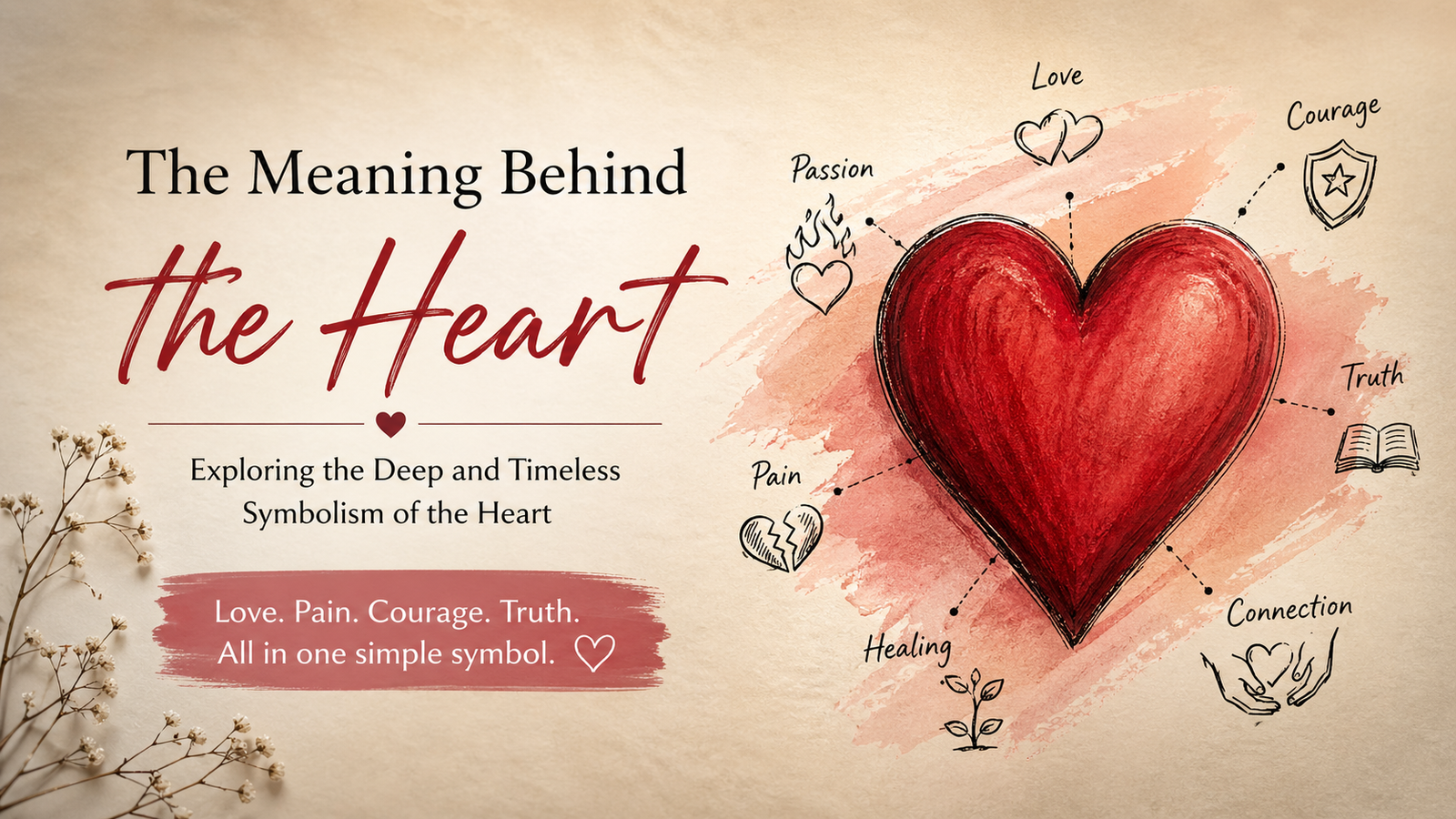
We throw hearts around a lot. Text messages, captions, doodles in the margins of a notebook when we’re bored. It’s almost automatic at this point. And yet… the heart as a symbol? It’s doing a lot more work than we give it credit for.
Like, way more.
I mean, think about it—why the heart? Why not the brain, or the hands, or something else entirely? But no, across time and cultures, people kept coming back to this one shape. A bit uneven, not even anatomically accurate… and still, it stuck.
So Where Did It Even Come From?
No one really agrees. There are theories—some say it came from ancient plant shapes, others connect it to early drawings of the human body. But honestly, the exact origin feels less important than what happened after.
Because over time, people started attaching meaning to it. Deep meaning.
Back in ancient Egypt, the heart was everything. Not just emotion, but your moral core. After death, it was believed your heart would be weighed against a feather. Heavy heart? Not great news.
And then later, in Greek and medieval traditions, the heart slowly turned into this emotional center. Love, pain, longing… all placed there.
It’s kind of poetic, even if it’s not scientifically accurate.
What the Heart Symbol Really Stands For
Here’s the thing—it’s not just one meaning. It shifts. Sometimes subtly, sometimes completely.
The obvious one… love
Yeah, we can’t avoid this. The heart is basically shorthand for love now.
Romantic love, mostly. But also friendship, family, even those small “thinking of you” moments. It covers a lot.
And yet, even this version isn’t always soft and pretty. Love can hurt. It can confuse you. So the heart carries that weight too.
And then there’s heartbreak
A broken heart symbol? You don’t need words. Everyone gets it instantly.
It’s loss. Disappointment. That weird hollow feeling after something ends.
And weirdly, people connect deeply with this version. Maybe because it feels honest.
Courage… which people forget about
You’ve heard phrases like “have heart,” right?
That’s not about romance at all. It’s about pushing through. Standing firm. Not giving up.
So yeah—the heart also represents strength. Quiet strength, mostly.
Truth, instinct… that gut feeling
“Follow your heart.”
We say it all the time, even when we don’t fully believe it. But there’s something there—this idea that the heart knows things logic doesn’t.
Or maybe… it just feels things more clearly.
A Messy Little Table (Because Why Not)
| Situation | What the Heart Symbol Feels Like |
|---|---|
| Falling in love | Warm, exciting… a bit chaotic |
| Going through loss | Heavy, slow, kind of dull |
| Taking a risk | Fast, loud, slightly terrifying |
| Healing | Quiet, gradual, uneven |
| Being real | Honest, exposed, a little scary |
Not super scientific. But you get the idea.
Different Versions of the Heart (They All Hit Different)
People don’t just use one heart symbol. There are variations, and they actually say different things.
- Open heart → “I trust you… I think”
- Closed or locked heart → holding back, protecting yourself
- Flaming heart → intense feelings, maybe a little overwhelming
- Broken heart → yeah… no explanation needed
- Growing heart (with leaves or vines) → healing, starting again
Some of these show up in tattoos, some in art, some just in random sketches. But they all carry something personal.
It Shows Up Everywhere (Even When You Don’t Notice)
You’ll see heart symbolism in:
- Jewelry (those tiny pendants people never take off)
- Social media (obviously… ❤️ everywhere)
- Old letters and notes
- Tattoos with stories behind them
- Even logos and branding
And sure, sometimes it feels overdone. A bit cliché. But that’s kind of the trade-off of something being universally understood.
It loses uniqueness… but gains connection.
A Slightly Personal Thought
Here’s where it gets a bit real.
The heart symbol doesn’t mean the same thing to everyone. It just doesn’t.
For some people, it’s tied to a relationship. For others, it might remind them of a tough time they got through. Or someone they lost. Or even themselves—like learning to be okay alone.
It changes depending on what you’ve been through.
Which is probably why it sticks around.
If You Wanna Go Deeper…
There’s actually a pretty interesting take on symbolism for heart that explores different meanings across cultures and emotions. It’s not too heavy or academic—just a good read if you’re curious beyond the surface.
So… Why Does It Still Matter?
Honestly?
Because we still need it.
We don’t always have the right words. Sometimes we don’t even understand what we’re feeling ourselves. And the heart symbol kind of fills that gap.
It says, “this matters” without explaining everything.
And maybe that’s enough.
Not a Perfect Ending (But That’s Fine)
The heart as a symbol is messy. A little overused. Sometimes misunderstood.
But it works.
It holds love, pain, courage, truth—all in one simple shape. And even when we don’t think about it consciously, we still use it. Every day.
Which… says something.
Maybe not something neat or perfectly defined. But something real.