
 By Malik Rehan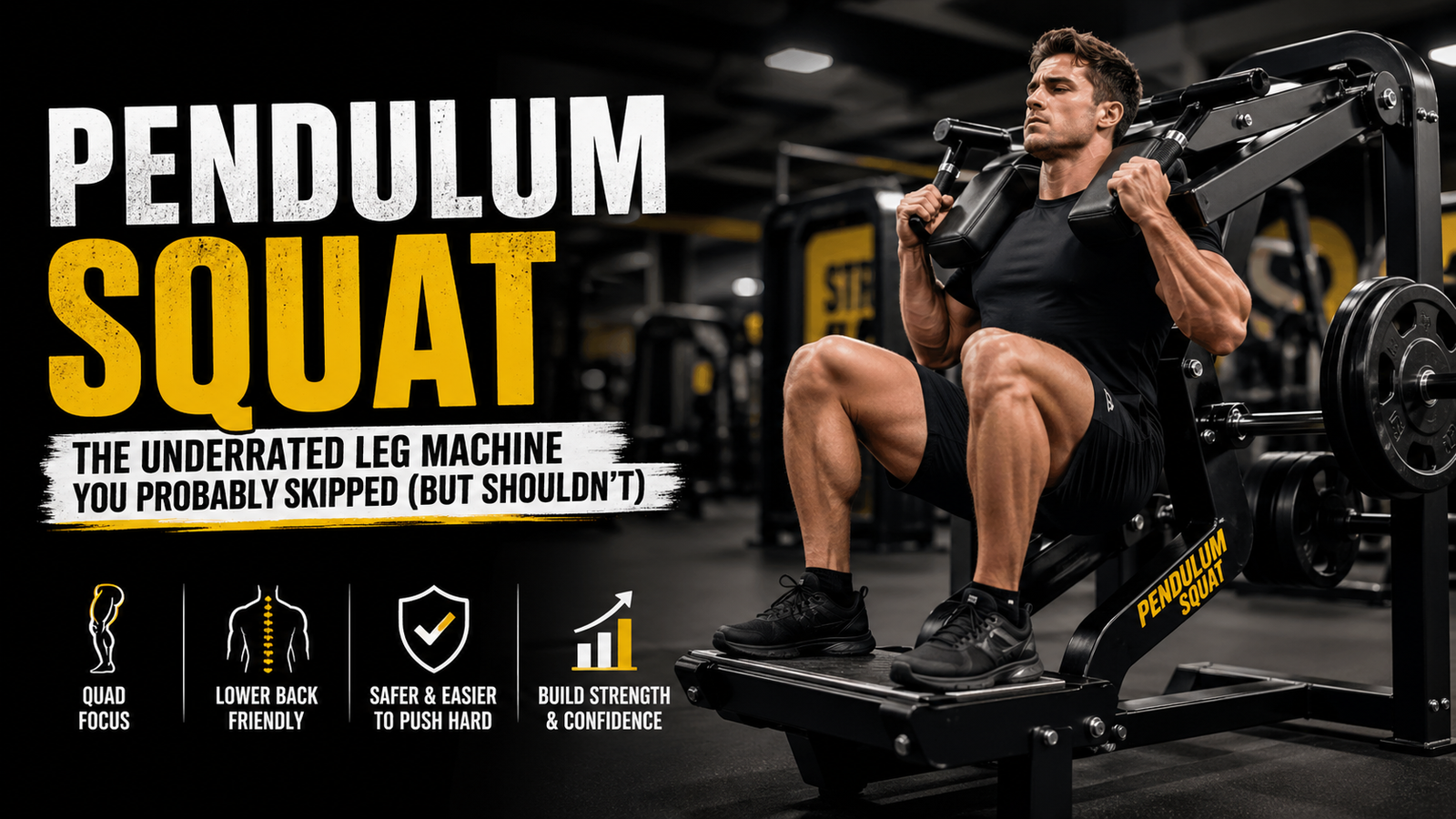
Walk into any gym and you’ll see the usual suspects—leg press, barbell squats, maybe a hack squat machine tucked in a corner. But then there’s this other machine. Slightly intimidating. A bit… mechanical-looking. That’s the pendulum squat. And honestly? It doesn’t always get the attention it deserves.
Let’s talk about it. Not in a textbook way—but like how someone would actually explain it after using it for a few weeks and realizing, oh… this thing hits different.
What Even Is a Pendulum Squat?
At its core, the pendulum squat is a machine-based squat variation where the platform moves in a curved (pendulum-like) arc. You stand on a fixed base, push against a platform with your shoulders under pads, and squat down as the machine swings.
Sounds simple. And it kind of is.
But the feel… that’s where things change.
Unlike a barbell squat, where balance, core, and technique all fight for attention, the pendulum squat locks you into a path. So your legs—especially quads—do most of the talking.
If you’re curious, here’s a deeper look at the concept of the pendulum squat and why it’s getting popular lately.
Why People Are Suddenly Talking About It
A few years ago, most lifters ignored this machine. Now? It’s trending.
And there are reasons for that.
- It reduces lower back stress
- It lets you go heavy without worrying about balance
- It absolutely destroys your quads (in a good way… mostly)
- It’s beginner-friendly but still brutal for advanced lifters
And honestly… sometimes you just don’t feel like loading a barbell and mentally preparing for a heavy squat. This is where the pendulum squat sneaks in like, “Hey, I got you.”
Muscle Groups Worked
Here’s a quick breakdown of what gets hit when you use this machine:
| Muscle Group | Activation Level | Notes |
|---|---|---|
| Quadriceps | ⭐⭐⭐⭐⭐ | Primary driver, especially at deeper ranges |
| Glutes | ⭐⭐⭐⭐ | Engaged more if you go deep |
| Hamstrings | ⭐⭐⭐ | Stabilization role mostly |
| Calves | ⭐⭐ | Minor involvement |
| Core | ⭐⭐ | Less than free-weight squats |
So yeah… if your goal is bigger, stronger quads—this machine is kind of a cheat code.
How to Use It (Without Looking Lost)
The first time can feel awkward. Totally normal.
Here’s a simple way to get started:
- Step onto the platform and position your shoulders under the pads
- Place your feet shoulder-width apart (or slightly wider)
- Unlock the safety handles
- Lower yourself slowly—don’t rush this part
- Go as deep as you comfortably can
- Push back up through your heels
And that’s it. But also… not really.
Because small tweaks change everything.
Small Adjustments That Make a Big Difference
This is where things get interesting.
Try these variations:
- Foot Placement Higher → More glute activation
- Feet Lower → Quad burn intensifies (brace yourself)
- Narrow Stance → Targets outer quads
- Wide Stance → More inner thigh involvement
And sometimes you’ll find a position that just clicks. That’s your sweet spot.
The Pros (Why You Might Love It)
Let’s be real. No exercise is perfect—but the pendulum squat comes close for certain goals.
- You can train legs hard without frying your lower back
- It’s safer for people with balance issues
- You can push to failure with less risk
- It creates a smooth, controlled movement pattern
And here’s a big one…
It builds confidence.
Because when you’re not worried about tipping forward or failing under a barbell, you push harder. Simple as that.
The Cons (Yeah, There Are Some)
Nothing’s perfect. Not even this.
- Not available in every gym
- Less functional carryover compared to free weights
- Can feel too “guided” for some lifters
- Easy to overload without realizing it
And honestly… some people just prefer the raw feel of a barbell. That’s fair.
Pendulum Squat vs Traditional Squat
Let’s break it down in a quick comparison:
| Feature | Pendulum Squat | Barbell Squat |
|---|---|---|
| Balance Required | Low | High |
| Lower Back Stress | Low | Moderate to High |
| Quad Isolation | High | Moderate |
| Skill Level Needed | Beginner-Friendly | Intermediate+ |
| Functional Strength | Moderate | High |
So… which one is better?
Honestly? Neither. They just serve different purposes.
Who Should Use It?
Not every exercise is for everyone—but this one comes pretty close.
You’ll benefit if:
- You’re a beginner learning squat mechanics
- You have lower back concerns
- You want to isolate your quads more
- You’re recovering from injury (with proper guidance)
- You’re just… bored of regular squats
And even advanced lifters use it as a finisher. Because it burns. A lot.
Sample Workout Idea
If you want to try it without overthinking:
Pendulum Squat Finisher Routine:
- 3 sets of 10–12 reps (moderate weight)
- 1 drop set (reduce weight, go to failure)
- Rest: 60–90 seconds
Optional add-on:
- Slow tempo (3 seconds down… feel the pain… I mean, tension)
A Few Real-World Tips (Stuff You Won’t Always Hear)
- Don’t ego lift on this machine—it sneaks up on you
- Go deep, but not at the cost of form
- Control the negative… seriously
- And breathe. People forget this one
Also… expect soreness. The kind where stairs become your enemy the next day.
Final Thoughts (Not Too Polished, Just Honest)
The pendulum squat isn’t flashy. It’s not something you brag about like a heavy barbell squat.
But it works. Quietly. Effectively.
And sometimes that’s what you need—an exercise that doesn’t demand perfection, just effort.
Will it replace traditional squats? Probably not.
Should it be in your routine? Yeah… at least give it a shot.
Because once you feel that deep quad burn—
you’ll get it.
And maybe, just maybe, you’ll start walking past the squat rack… straight to that weird-looking machine in the corner.