
 By Malik Rehan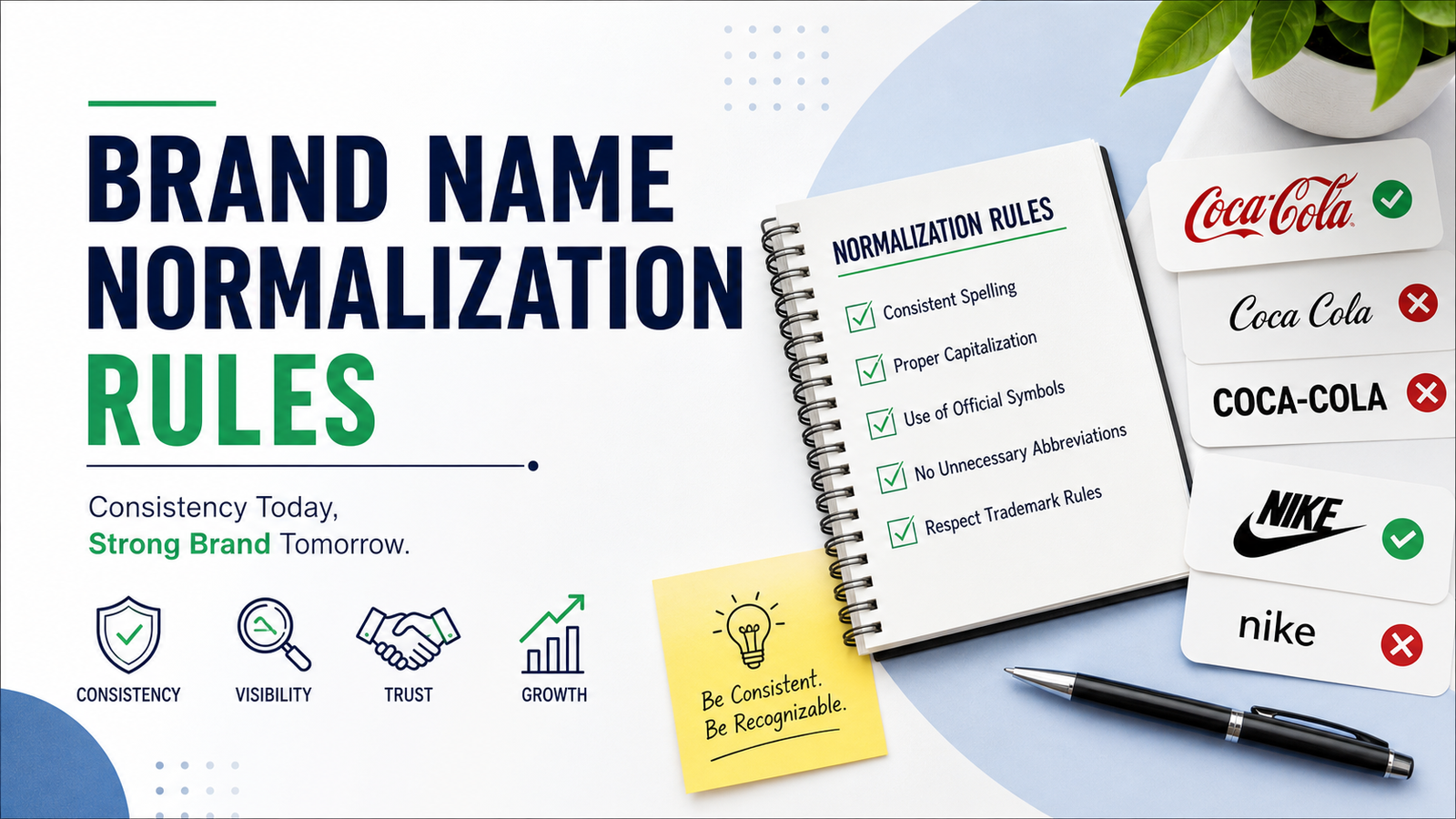
Ever noticed how the same brand can show up in ten slightly different ways across the internet?
“Coca Cola”… “Coca-Cola”… “coca cola”… even “Coke.”
Messy, right?
That’s exactly where brand name normalization rules come in. Not the flashiest topic, sure—but quietly important. Like… the kind of thing you only notice when it’s done wrong.
Let’s unpack it a bit. No stiff textbook vibe—just real talk.
What Are Brand Name Normalization Rules?
At the simplest level, brand name normalization is about keeping a brand’s name consistent everywhere it appears.
Same spelling. Same format. Same punctuation. Every time.
Sounds obvious… but it’s not always followed.
And when it’s not? Things get confusing—fast.
If you’re digging deeper into this topic, this guide on brand name normalization rules gives a solid starting point too.
Why It Actually Matters
You might think, “Okay, but does it really matter if someone writes ‘iPhone’ as ‘Iphone’?”
Short answer: yeah… it kinda does.
Here’s why:
- Search engines care
Inconsistent names can split search results. You lose visibility without even realizing it. - Trust takes a hit
If a brand can’t even spell its own name consistently… people notice. - Data becomes messy
Especially in analytics, CRM tools, or e-commerce listings. - Legal and trademark issues
Some names must be written a certain way. No shortcuts.
And yeah, it adds up.
Common Normalization Problems (You’ve Probably Seen These)
Let’s be honest—these happen all the time:
- Random capitalization
(“nike” vs “Nike”) - Missing symbols
(“McDonalds” vs “McDonald’s”) - Extra spacing
(“Adidas Originals” vs “AdidasOriginals”) - Abbreviations vs full names
(“KFC” vs “Kentucky Fried Chicken”) - Regional differences
(“Pepsi Max” vs “Diet Pepsi” depending on location)
It’s small stuff… but repeated thousands of times, it becomes a big deal.
Core Brand Name Normalization Rules
Alright, here’s where it gets practical. These are the rules most teams follow—loosely, but still.
1. Stick to the Official Brand Format
Always use the version the brand itself uses.
Not what feels right. Not what autocorrect suggests.
The official one.
2. Maintain Consistent Capitalization
If it’s “eBay”… don’t write “Ebay” or “EBAY.”
Yes, even if it looks weird at the start of a sentence.
3. Respect Special Characters
Symbols matter more than people think.
- ®
- ™
- Hyphens
- Apostrophes
Dropping them can change meaning—or legality.
4. Avoid Unnecessary Abbreviations
Unless the abbreviation is the brand.
Example:
- “IBM” ✔
- “International Business Machines” (rarely used in casual contexts)
5. Create Internal Guidelines
This one’s underrated.
Teams should have a simple doc that says:
- “Use this version, not that one.”
- “Never write it like this.”
It saves time… and arguments.
A Quick Comparison Table
Here’s a simple look at how normalization plays out:
| Brand Variation | Normalized Version | Issue Type |
|---|---|---|
| iphone | iPhone | Capitalization |
| coca cola | Coca-Cola | Hyphen + capitalization |
| mcdonalds | McDonald’s | Apostrophe |
| youtube | YouTube | Case sensitivity |
| k f c | KFC | Spacing |
See the pattern? It’s not complicated… just often ignored.
Where Normalization Really Shows Up
This isn’t just a branding team problem. It touches everything.
Content Writing
Blog posts, articles, product descriptions…
Writers slip up. Especially when typing fast.
E-commerce Listings
Different sellers, same product… wildly different spellings.
And then customers can’t find what they’re looking for.
SEO and Search Visibility
Search engines try to understand intent, but inconsistency doesn’t help.
It splits ranking power across variations.
Not ideal.
Data & Analytics
Imagine trying to track brand mentions…
But half of them are spelled differently.
Yeah. Nightmare.
Simple Ways to Fix It (Without Overcomplicating Things)
You don’t need a huge system to start. Just a few habits:
- Create a brand name checklist
Keep it short. Easy to scan. - Use find-and-replace tools
Fix errors quickly across large documents. - Train your team (casually)
Not a long meeting. Just… awareness. - Use templates
Especially for product listings or blogs. - Automate where possible
Some tools can standardize names automatically.
And honestly… even doing 50% of this helps a lot.
A Slightly Overlooked Detail…
Tone matters too.
Sometimes people intentionally break normalization rules for style.
Like writing “google it” instead of “Google it.”
And yeah—that’s fine in casual writing.
But in official content?
Better to stay consistent.
The Balance Between Perfection and Practicality
Here’s the thing…
You don’t need to be obsessive about it.
Really.
But ignoring it completely? That creates problems later.
So it’s about balance:
- Not robotic
- Not careless
Somewhere in the middle.
Final Thoughts (Not Too Formal, Promise)
Brand name normalization rules aren’t exciting. Let’s just say it.
But they’re one of those behind-the-scenes things that quietly hold everything together.
Content looks cleaner. Data makes sense. Brands feel… more solid.
And yeah, people trust consistency—even if they don’t consciously notice it.
So next time you type a brand name, maybe pause for a second.
Is it the right version?
If not… small fix. Big difference.
And that’s kind of the whole point.