
 By Malik Rehan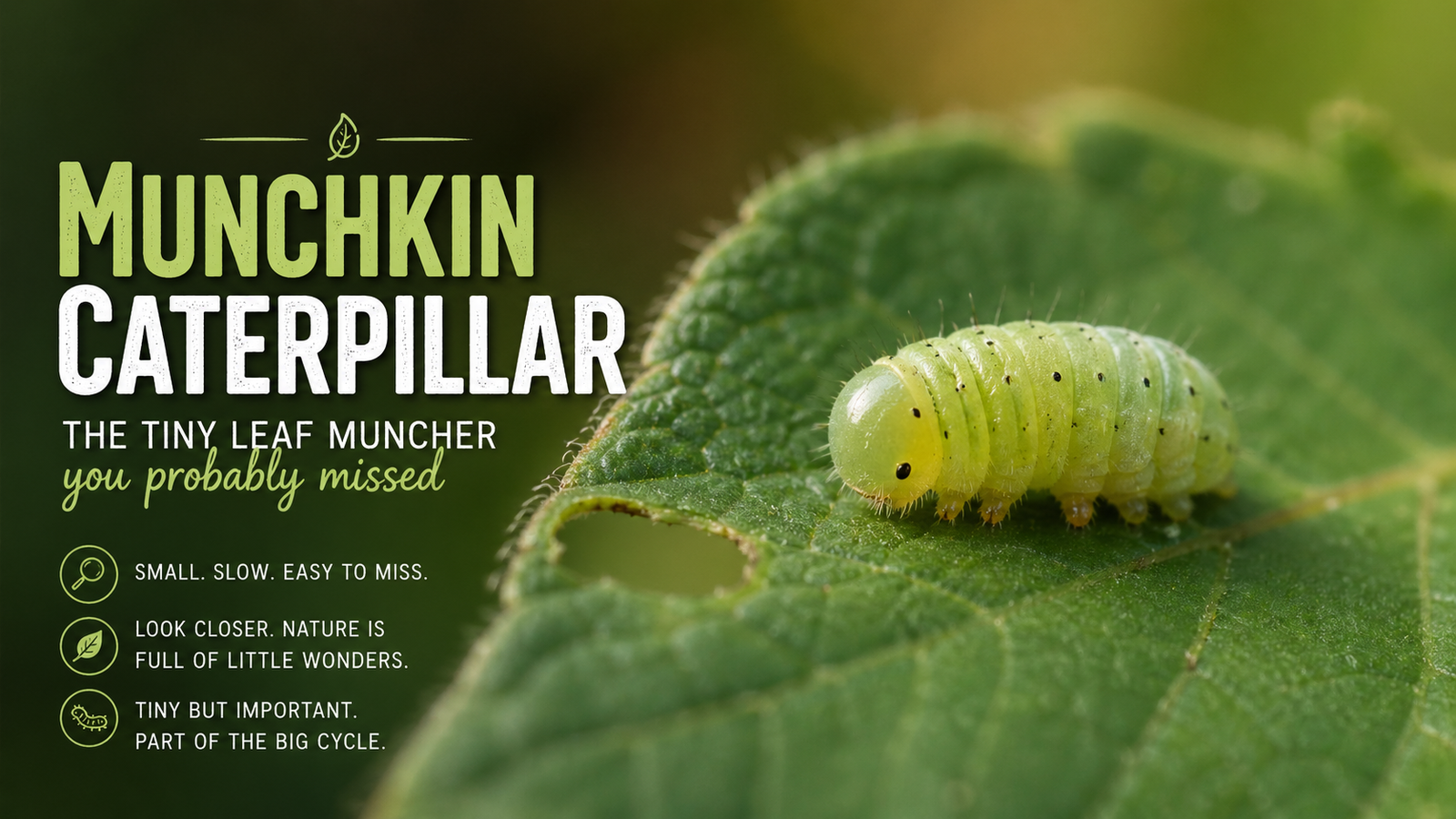
I didn’t even notice it at first.
Just a small bump on a leaf. Thought it was dirt… or maybe a bit of dried plant. But then it moved. Slowly. Almost like it wasn’t sure it wanted to move. And that’s kind of how I got curious about what people casually call the “munchkin caterpillar.”
Not a scientific name, by the way. More like a nickname people throw around when a caterpillar looks unusually small, stubby, or just… oddly cute. Yeah, “cute” isn’t biology. Still counts though.
And honestly, once you start looking for them, you realize they’re not that rare. Just easy to ignore.
So… what is a munchkin caterpillar?
Let’s keep it simple.
A munchkin caterpillar is basically any caterpillar that looks:
- Short and chubby
- A bit squished compared to the long ones
- Slow… like really slow
- Sometimes brighter or softer in color
- Slightly “cartoon-ish” in shape
That’s it. No strict definition. No official category. Just a look people recognize.
And yeah, sometimes it’s just a baby caterpillar that hasn’t stretched out yet. Other times, it stays like that longer than expected.
Nature doesn’t explain itself much.
Why do they look so… compact?
There isn’t one clear answer. And that’s where it gets a bit messy.
Some reasons people have noticed:
- Genetics – certain species are naturally short and thick
- Early growth stage – young caterpillars tend to look chunkier
- Food quality – not enough nutrients can affect growth
- Weather conditions – temperature and humidity can play a role
Or… sometimes nothing is wrong at all. It just is.
We like neat explanations. Nature doesn’t always cooperate.
Quick comparison (because it helps)
| Feature | Regular Caterpillar | Munchkin Caterpillar |
|---|---|---|
| Body shape | Long, stretched | Short, chunky |
| Movement | Smooth crawling | Slower, stop-start |
| First impression | “Just a caterpillar” | “Wait… what is that?” |
| Visibility | Easier to spot | Easy to miss |
Still not a rule. Just… a pattern people notice.
Where you might actually find one
You don’t need to go deep into a forest or anything dramatic.
Try this instead:
- Check the underside of leaves
- Look around small garden plants
- Bushes, especially the messy ones nobody trims
- Early morning… or late afternoon
And don’t rush it. If you walk too fast, you’ll miss them completely.
They’re tiny. Like, blink-and-you-miss-it tiny.
Watching one feels… weirdly calming
This might sound strange, but if you ever just sit and watch one for a bit…
You’ll notice things.
- It moves in small, careful steps
- Stops randomly… like it forgot what it was doing
- Sometimes curls slightly if disturbed
- Doesn’t seem in a hurry at all
And I don’t know — there’s something about that slow pace that sticks with you.
Everything else is rushing. This thing isn’t.
Are they safe to touch?
Eh… better not.
Some caterpillars have:
- Tiny irritating hairs
- Mild toxins
- Bright colors that mean “don’t touch me”
So yeah. Just look.
If you really want to move one, use a leaf or a small stick. No need to risk itchy fingers for curiosity.
Why people are suddenly talking about them
You’ve probably seen the term popping up online. Random posts, blogs, maybe short videos…
It’s mostly because people love discovering “tiny cute things.” That’s it.
But also — once someone points it out, others start noticing too. That’s how curiosity spreads.
If you’re digging into it, you might run into stuff like munchkin caterpillar guides or observations people have shared. Nothing too formal… just real sightings and thoughts.
And honestly, that makes it more interesting.
Their role (even if they look small and harmless)
It’s easy to think they don’t matter much. But they do.
- They eat plants — which helps control growth
- They’re food for birds and insects
- They turn into moths or butterflies
- And yeah, they’re part of the whole cycle
Small doesn’t mean unimportant. Just less noticeable.
Life cycle — same as any caterpillar
Nothing special here, even if they look different.
- Egg
- Caterpillar (the munchkin phase, sometimes)
- Pupa
- Adult moth or butterfly
That’s the full loop.
The “munchkin” part is just a moment in that process… or a longer phase for some.
If you actually want to spot one
A few simple tips:
- Slow down. Seriously.
- Don’t just look at plants — look under them
- Pick one small area and observe instead of walking around
- Be patient… longer than you think you need to be
And even then, you might not find one.
But when you do — it feels like you discovered something small but oddly special.
Final thought… or not really a conclusion
The munchkin caterpillar isn’t rare. It’s not officially named. It’s not even that important in the grand scheme of things.
But it sticks with you.
Because it’s easy to miss. And once you notice it, you realize how many small things you’ve probably been ignoring.
Not everything needs to be big or impressive.
Sometimes it’s just a tiny, slow-moving caterpillar on a leaf… doing its thing… completely unnoticed.
Until you stop for a second.
And actually look.
 Admin
Admin