
 By Malik Rehan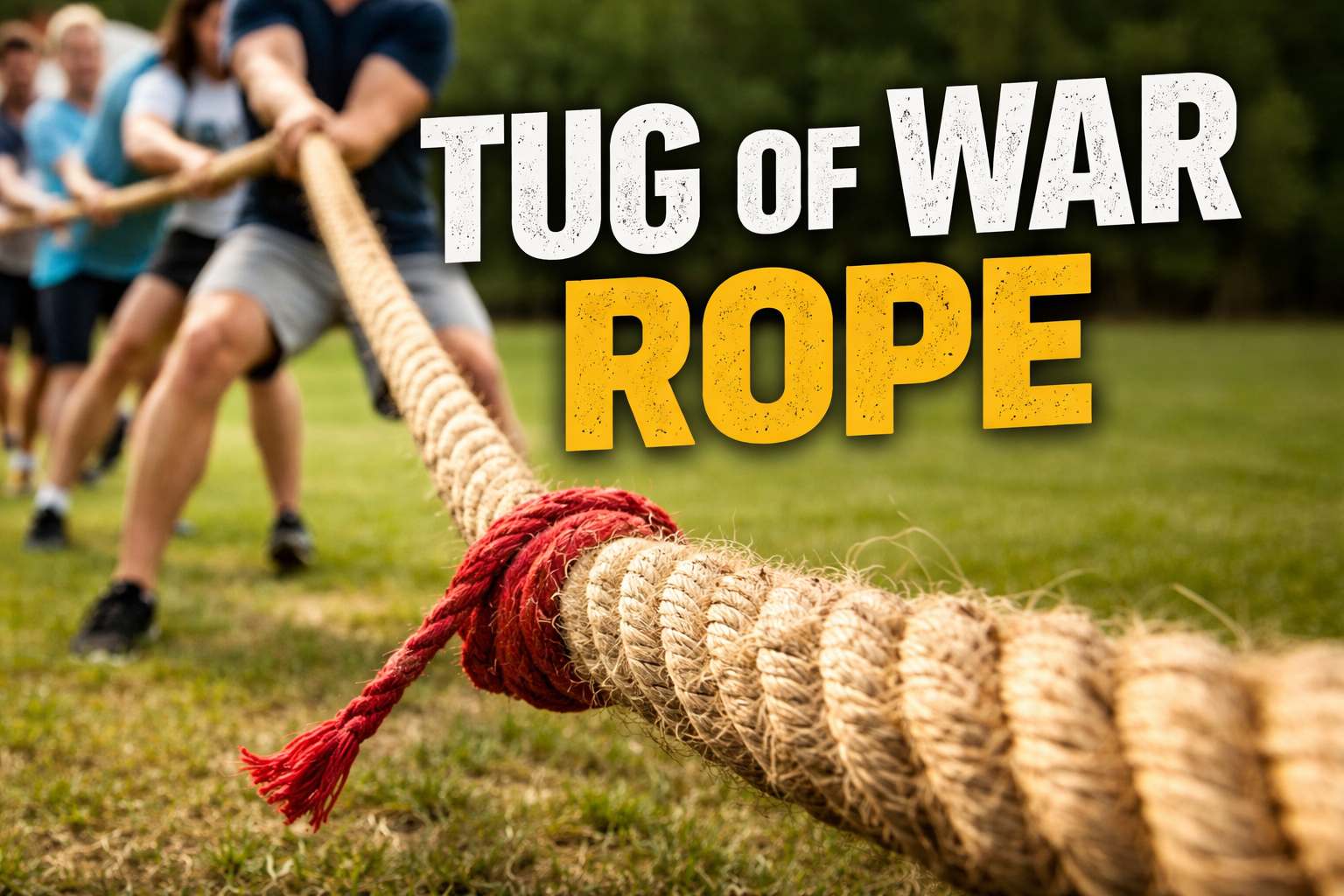
Most people don’t think twice about the rope in tug of war. It’s just… there. You grab it, pull, shout a bit, maybe fall over. Game done.
But if you’ve ever used a bad rope, you already know — it can ruin the whole thing.
Let’s talk about it. Not in a boring, textbook way. Just… real stuff.
So, what is a tug of war rope anyway?
It’s basically a thick rope made for pulling contests. That’s it. But also… not really.
A proper tug of war rope needs to handle a lot — weight, pressure, people yanking in opposite directions like their life depends on it. And sometimes it actually feels like that.
Why you shouldn’t just grab any random rope
I’ve seen people do this. They find some old rope lying around and go, “Yeah, this will work.”
It… kinda works. Until it doesn’t.
Here’s what usually goes wrong:
- Too rough → your hands regret everything
- Too smooth → slipping everywhere
- Too weak → yeah… snapping risk (not fun)
- Too thin → no proper grip
And suddenly the game isn’t fun anymore. It’s just chaos.
The different types (not as boring as it sounds)
Okay, quick rundown. Nothing complicated.
- Manila rope
- Old-school, natural fiber
- Feels authentic… also a bit harsh on hands
- Strong grip though
- Polypropylene rope
- Lighter, smoother
- Doesn’t absorb water (great for outdoor use)
- Easier to manage
- Blended ropes
- Somewhere in between
- Decent grip, decent comfort
Honestly, it comes down to preference. Some people love that rough, classic feel. Others just want something that won’t destroy their palms.
Basic size guide (don’t overthink it)
Here’s a simple table so you don’t have to guess:
| Thing | What works best |
|---|---|
| Length | 10–30 meters |
| Thickness | 24mm–38mm |
| Material | Manila or synthetic |
| Markings | Center + side marks |
If it’s for kids, go shorter and lighter. Big group? Get a longer rope. Pretty straightforward.
Picking the right one (quick tips)
Not gonna overcomplicate this.
- If it’s just for fun → go simple, lighter rope
- If it’s competitive → get something strong and thick
- Playing outside a lot? → avoid ropes that soak water
- Care about comfort? → don’t go too rough
And yeah… don’t just buy the cheapest thing you find. You’ll notice the difference immediately.
Using it properly (because people mess this up)
You’d think pulling a rope is obvious. It is… but also not.
A few things people forget:
- Pull together, not randomly
- Don’t wrap the rope around your hand (seriously, don’t)
- Lean back, not forward
- Keep the center mark visible
And communication matters. One team pulling in sync will beat a stronger but messy team. Happens all the time.
Random little detail (but kinda cool)
Tug of war used to be in the Olympics. Yeah. From 1900 to 1920.
Feels weird imagining that now… but also makes sense. It’s simple, raw, and surprisingly intense.
Final thought… or whatever this is
It’s funny how something as basic as a rope can make or break the game.
Good rope → solid grip, fair match, actual fun
Bad rope → slipping, frustration, maybe someone yelling “this is rigged” 😅
So yeah, next time you set up a tug of war, don’t ignore the rope. It’s not just a prop.
It’s kind of the whole game.