
 By Malik Rehan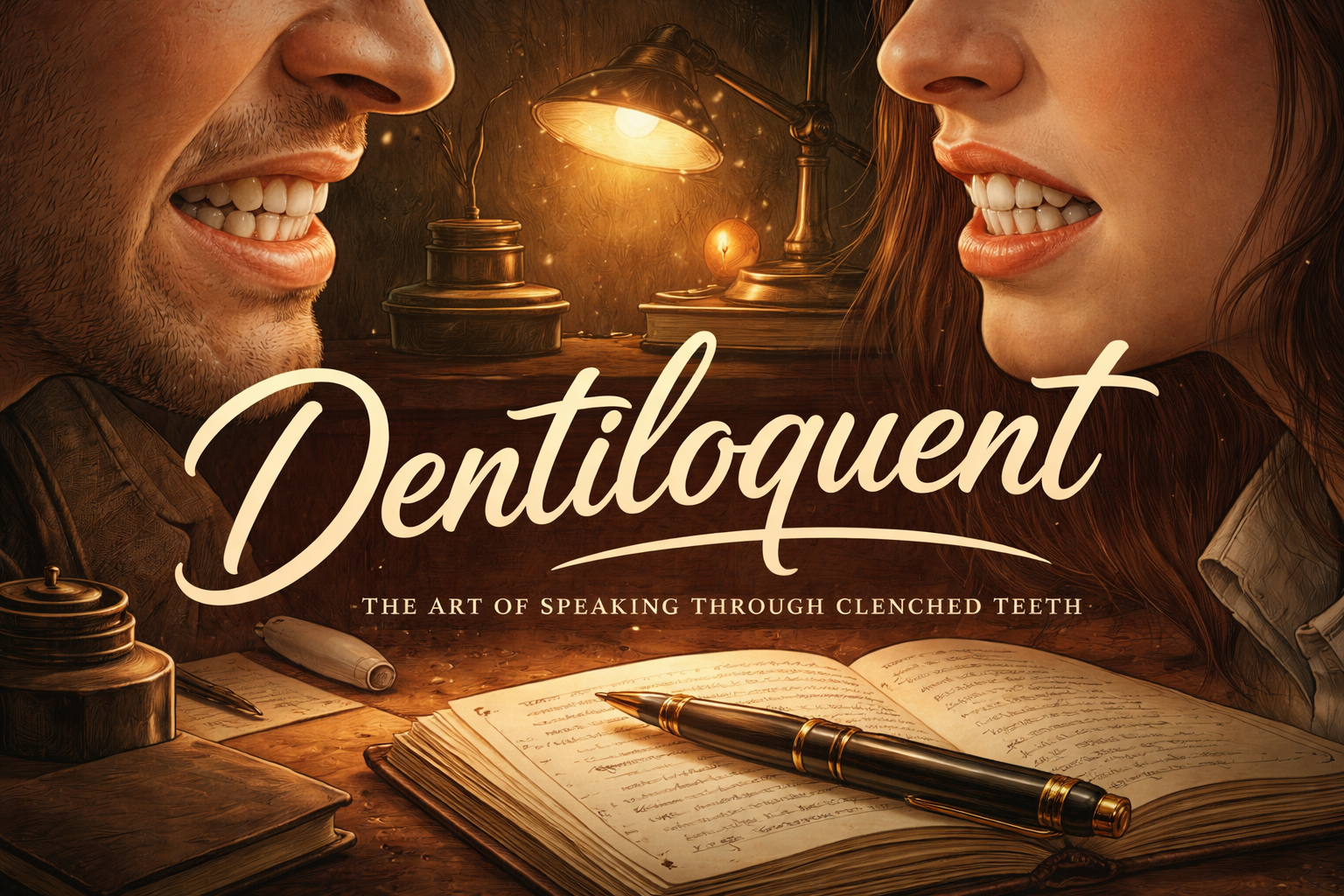
There’s something oddly fascinating about words that feel rare… almost hidden. Dentiloquent is one of those. Not a word you hear every day—honestly, maybe not even once in a lifetime unless you go looking for it. But once you notice it, it kind of sticks.
So… what does it mean?
At its core, dentiloquent describes a way of speaking where words are produced through clenched teeth. Yeah, literally. Imagine someone talking without fully opening their mouth—tight jaw, restrained expression, voice slipping out in a controlled, slightly tense way.
What Does Dentiloquent Really Feel Like?
It’s not just about sound. It’s about emotion too.
Sometimes people speak dentiloquently when they’re:
- Angry… but trying to stay composed
- Nervous, holding back what they really want to say
- Sarcastic in a very controlled, almost biting way
- Or even just physically tense
You’ve probably seen it in movies—someone says, “I’m fine,” but their teeth are clenched and… well, they’re clearly not fine.
And that’s the thing. Dentiloquent speech often carries more meaning than the words themselves.
A Quick Breakdown
| Aspect | Description |
|---|---|
| Pronunciation | Den-til-o-kwent |
| Origin | From Latin roots related to “teeth” and “speaking” |
| Tone | Restrained, tense, sometimes emotional |
| Common Usage | Describing speech under stress or control |
| Everyday Frequency | Very rare (almost poetic or literary) |
Why Does This Word Even Exist?
Good question. Because… honestly, it feels too specific, right?
But language has always loved precision. And sometimes, we need a word that captures not just what is said—but how it’s said.
Think about it:
- “He said it angrily” — okay, that works
- “He said it through clenched teeth” — better
- “He spoke dentiloquently” — now that’s… sharp, compact, almost artistic
And yeah, it sounds a bit formal. Maybe even old-fashioned. But that’s part of the charm.
Situations Where Dentiloquent Fits Perfectly
You won’t use this word in casual WhatsApp chats (probably). But it fits beautifully in certain contexts:
- Creative writing — especially in tense or emotional scenes
- Character descriptions — showing suppressed anger or control
- Poetry — where tone matters more than simplicity
- Literary analysis — describing subtle emotional delivery
And sometimes… just for fun. Because using unusual words can be oddly satisfying.
Dentiloquent vs Similar Expressions
Let’s be honest—most people won’t say “dentiloquent.” They’ll say something simpler.
Here’s how it compares:
| Expression | Meaning Similarity | Style Level |
|---|---|---|
| “Through clenched teeth” | Very close | Casual |
| “Muttering” | Some overlap | Neutral |
| “Hissing” | Emotional tone | Dramatic |
| “Dentiloquent” | Exact nuance | Formal/Literary |
So yeah… dentiloquent isn’t necessary. But it’s precise. And sometimes, precision feels good.
A Few Example Sentences
Just to get a feel for it:
- “He answered dentiloquently, barely hiding his frustration.”
- “Her dentiloquent reply told me more than her words ever could.”
- “And then he smiled—tight, forced—and spoke dentiloquently…”
You can almost hear the tension, right?
Why Words Like This Matter
It’s easy to think, “Who cares about such a rare word?” And fair enough.
But here’s the thing…
Language isn’t just about communication. It’s about expression. Tiny shades of meaning. Small emotional cues. The stuff that turns a plain sentence into something that actually feels alive.
And words like dentiloquent—they capture those shades. Even if we don’t use them every day.
Final Thoughts… or Something Like That
Dentiloquent isn’t a word you need. But it’s a word you might enjoy knowing.
It sits quietly in the background of language—rare, specific, a little dramatic. The kind of word that makes you pause for a second… maybe even smile.
And honestly, that’s enough.
Because sometimes, discovering a strange little word like this—
that’s the fun part.