
 By Malik Rehan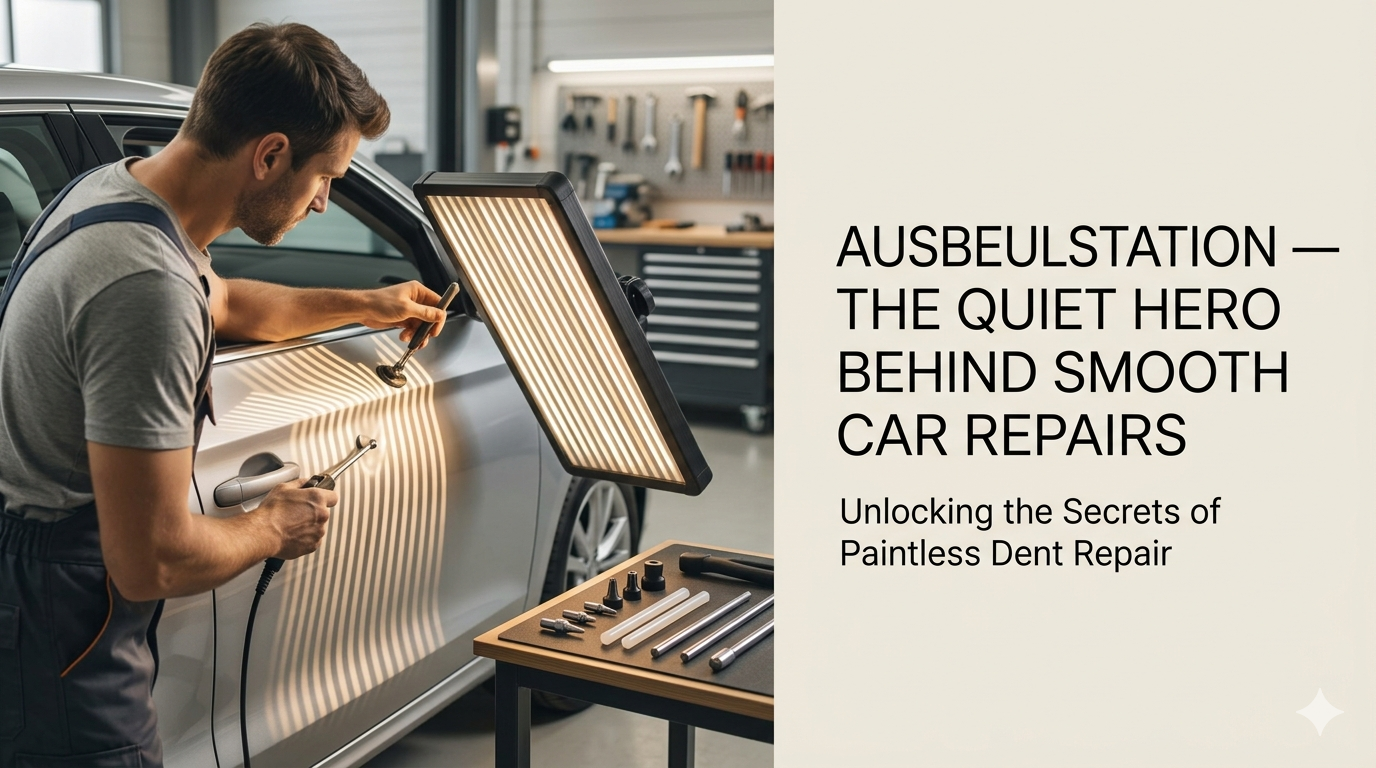
There’s something oddly satisfying about a perfectly smooth car panel. No dents, no creases… just clean lines reflecting light the way they should. But let’s be honest—life happens. A stray shopping cart, a careless parking bump, maybe even a hailstorm out of nowhere. And suddenly, that flawless surface? Not so flawless anymore.
That’s where an ausbeulstation comes in.
If you’ve never heard the term before, you’re not alone. It sounds a bit technical—almost intimidating—but it’s actually pretty simple. An ausbeulstation is basically a specialized setup or service point where dents are removed from vehicles. No heavy repainting. No full panel replacements. Just careful, skilled work that brings your car back to life.
And yeah… it’s kind of underrated.
So, What Exactly Happens at an Ausbeulstation?
At its core, an ausbeulstation focuses on dent removal techniques—especially paintless dent repair (PDR). That means technicians work from behind the panel or use specialized tools to gently massage the metal back into place.
No sanding. No fillers. No repainting.
Just patience… and skill.
Here’s what typically goes on:
- Inspection first — figuring out how deep or complex the dent is
- Tool selection — rods, levers, glue pullers… each dent needs a different approach
- Slow correction — tiny pushes, small adjustments, over and over
- Final smoothing — making sure the surface blends perfectly with the rest
And honestly, watching it happen can feel a bit like magic.
Why People Prefer This Method
Let’s be real—traditional bodywork can be expensive and time-consuming. And sometimes… it feels like overkill for a small dent.
An ausbeulstation offers a different route.
Here’s why people love it:
- It’s usually faster (often done in a few hours)
- Costs less than full body repairs
- Keeps the original paint intact (which matters more than people think)
- More eco-friendly — no chemicals, no repainting
- Helps maintain the car’s resale value
And yeah, that last one matters. A lot.
A Quick Comparison
Sometimes it’s easier to see the difference side by side:
| Feature | Ausbeulstation (PDR) | Traditional Repair |
|---|---|---|
| Paint Required | No | Yes |
| Repair Time | Hours | Days (sometimes weeks) |
| Cost | Lower | Higher |
| Original Finish | Preserved | Repainted |
| Environmental Impact | Minimal | Higher |
Not saying one is always better… but for dents without paint damage, the choice is pretty obvious.
When Should You Use an Ausbeulstation?
Not every dent qualifies, and that’s important to know.
This method works best when:
- The paint isn’t cracked or chipped
- The dent isn’t too sharp or stretched
- The panel is still structurally intact
- The damage is relatively small to medium
But if the damage is severe—like after a major accident—then yeah, traditional repair might still be necessary.
Still, for everyday dings? It’s perfect.
A Small Detail People Often Miss
Here’s something interesting… and not many people think about it.
When you repaint a panel, even if it looks perfect, it’s no longer factory original. And buyers? They notice. Or at least, inspections do.
That’s why keeping the original paint matters more than you’d expect.
An ausbeulstation helps you avoid that whole situation.
Finding the Right Place
Now, not all services are equal. Some are… okay. Others are genuinely impressive.
If you’re curious or looking to learn more, you can check out this resource:
👉 <ausbeulstation>
It’s a good starting point. Gives you a feel for what to expect and how these services actually work.
Final Thoughts (Well… Almost)
Cars aren’t just machines. They’re part of daily life—commutes, road trips, quick grocery runs. So when something small goes wrong, like a dent, it’s easy to ignore it.
But those little imperfections add up.
And fixing them doesn’t always have to be complicated.
An ausbeulstation offers a simpler, smarter way to deal with dents. No drama. No unnecessary work. Just careful restoration that—when done right—you won’t even notice afterward.
And maybe that’s the best part…
Because sometimes, the best repairs are the ones you can’t see at all.