
 By Malik Rehan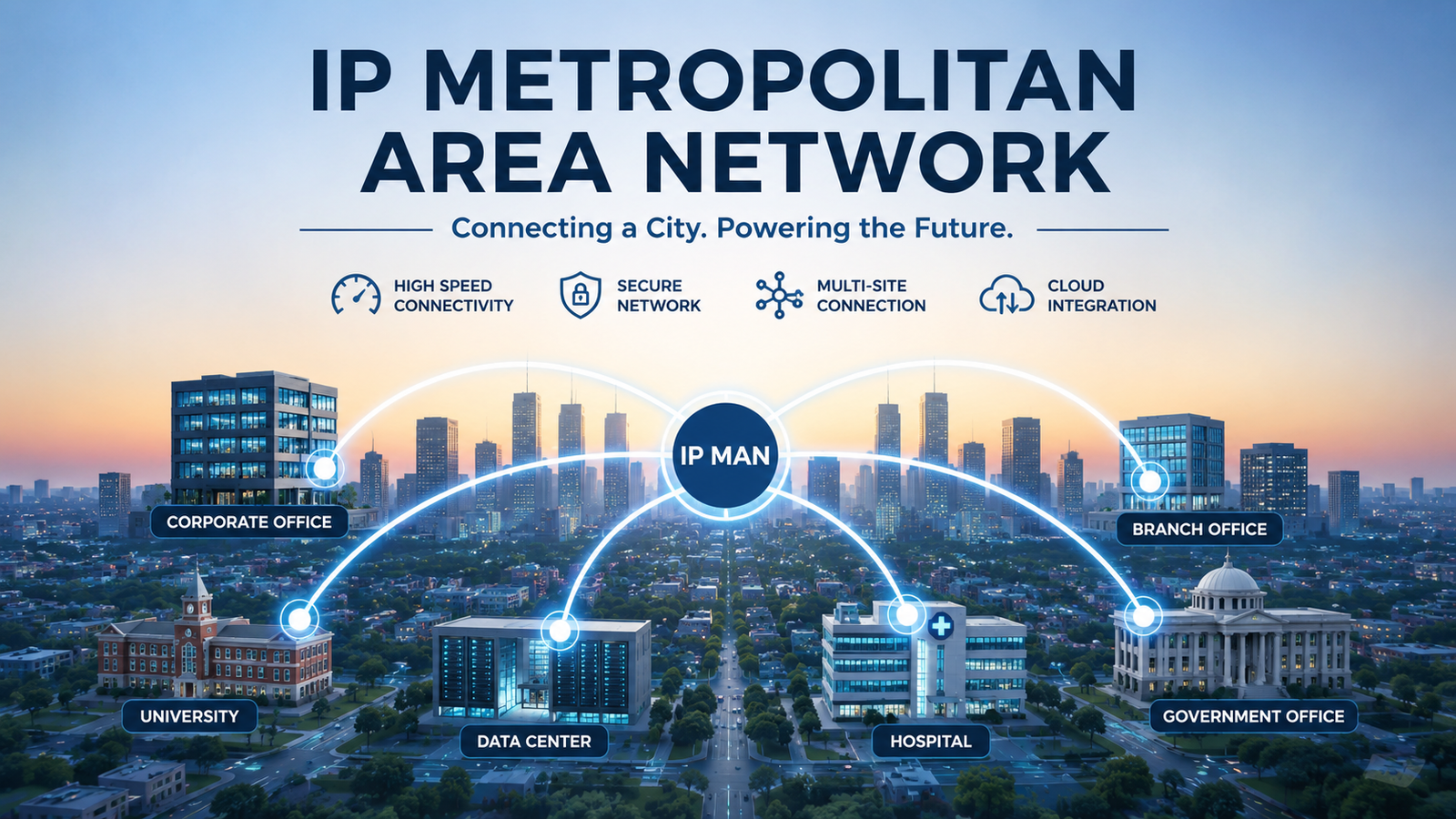
If you’ve been digging around networking topics lately, there’s a good chance you’ve seen the term IP metropolitan area network pop up more than once. And honestly… it sounds more complicated than it really is.
At its core, an IP metropolitan area network — often shortened to IP MAN — is a network that connects different locations across a city or large urban area using internet protocol (IP) technology. Think offices, campuses, hospitals, universities, or even government buildings all linked together so they can share data quickly and securely.
It’s kind of the middle ground between a small local network and a huge wide-area network. Not tiny. Not global either. Somewhere in between.
A lot of businesses are searching for ip metropolitan area network because remote work, cloud systems, smart city projects, and high-speed communication are becoming normal now. Fast connections matter more than ever.
So… What Exactly Is an IP Metropolitan Area Network?
Imagine a company with five offices spread across one city.
Instead of treating every office like a separate island, an IP metropolitan area network connects them into one shared system. Employees can access files, use the same servers, join video calls, and communicate almost like they’re sitting in the same building.
Pretty useful, honestly.
These networks usually cover distances larger than a local office network but smaller than national or international systems. Most MANs operate within cities, industrial zones, or nearby regions.
And unlike older networking setups, IP-based MANs use internet protocol technology, which makes them more flexible and easier to integrate with modern cloud platforms.
Here’s a quick comparison:
| Network Type | Coverage Area | Common Use |
|---|---|---|
| LAN | Single building | Home or office |
| MAN | City or metro area | Multi-office connections |
| WAN | Country or global | International companies |
Simple table… but it helps make things clearer.
Why Are People Searching for It So Much?
Part of it is curiosity. The name sounds technical, almost intimidating.
But there’s another reason too. Businesses are upgrading infrastructure. Schools are moving online. Hospitals share medical records between branches. And smart surveillance systems in cities need stable connections.
That’s where IP MAN solutions become valuable.
A few practical examples:
- A university connecting multiple campuses across a city
- Banks linking branches securely
- Internet service providers distributing broadband services
- Government departments sharing centralized databases
- Retail chains syncing inventory in real time
And yeah, speed matters here. Traditional systems can feel slow or messy when lots of locations are involved.
IP metropolitan area networks help reduce delays while keeping communication smoother.
Not perfect, of course. Nothing really is.
But they’ve become a practical solution for organizations that need reliable city-wide connectivity without building something insanely expensive.
Is It Safe or Legit?
Short answer? Usually yes.
An IP metropolitan area network is a legit networking model widely used by enterprises and institutions. Big organizations rely on these systems every day.
Still… security depends on how the network is configured.
A poorly managed MAN can face issues like:
- Unauthorized access
- Data interception
- Misconfigured routers
- Network downtime
- Cyberattacks
That sounds scary, but honestly, the same risks exist with almost every modern network.
The good thing is that most professional IP MAN systems include encryption, firewalls, traffic monitoring, and authentication controls. When properly maintained, they’re generally secure and stable.
Here’s a small breakdown of the good and bad sides:
Quick Pros and Cons
Pros
- Fast communication between locations
- Centralized data access
- Better collaboration
- Scalable for growing organizations
Cons
- Setup can be expensive
- Requires skilled management
- Security mistakes can create risks
- Maintenance costs add up over time
So yeah… useful, but not magically simple.
Real-Life Uses You Probably Don’t Notice
Funny thing is, most people use services connected through MAN infrastructure without realizing it.
Ever used public Wi-Fi in a city project area? Or streamed content in a smart transport station? Some of those systems rely on metropolitan networking.
Large hospitals are another big example. One branch might instantly access patient records stored in another location across town. That speed can genuinely matter during emergencies.
And universities love MAN setups because students across multiple campuses can access the same digital resources without lag or confusion.
Even security camera systems in modern cities often depend on these networks.
It’s kind of everywhere once you start noticing it.
Does It Still Matter in the Cloud Era?
Actually… yes.
Some people assume cloud computing replaced traditional networking models entirely. But cloud systems still need reliable infrastructure underneath them. Offices and data centers still need fast connections.
That’s where IP metropolitan area networks continue to fit in.
In many cases, they act like the bridge between local offices and cloud platforms.
Without stable metropolitan connectivity, cloud apps can feel slow, unreliable, or inconsistent. Especially for companies moving massive amounts of data every day.
So while the technology itself isn’t brand new, it’s definitely still relevant.
Maybe more than people think.
FAQs
What does IP metropolitan area network mean?
It refers to a network that connects multiple locations across a city or metropolitan region using internet protocol technology.
Is an IP MAN faster than regular internet?
In many business setups, yes. Dedicated metropolitan networks often provide faster and more stable communication between connected locations.
Who uses metropolitan area networks?
Businesses, universities, hospitals, banks, government offices, and internet providers commonly use them.
Final Thoughts
Honestly, the term “IP metropolitan area network” sounds way more technical than it needs to be. Once you break it down, it’s really just a smarter way to connect multiple places across a city.
And in a world where everything depends on speed, cloud access, and real-time communication… that matters.
It’s not some flashy consumer technology people talk about every day. But behind the scenes, these networks quietly keep a lot of modern systems running. And that’s probably why people keep searching for it.