
 By Malik Rehan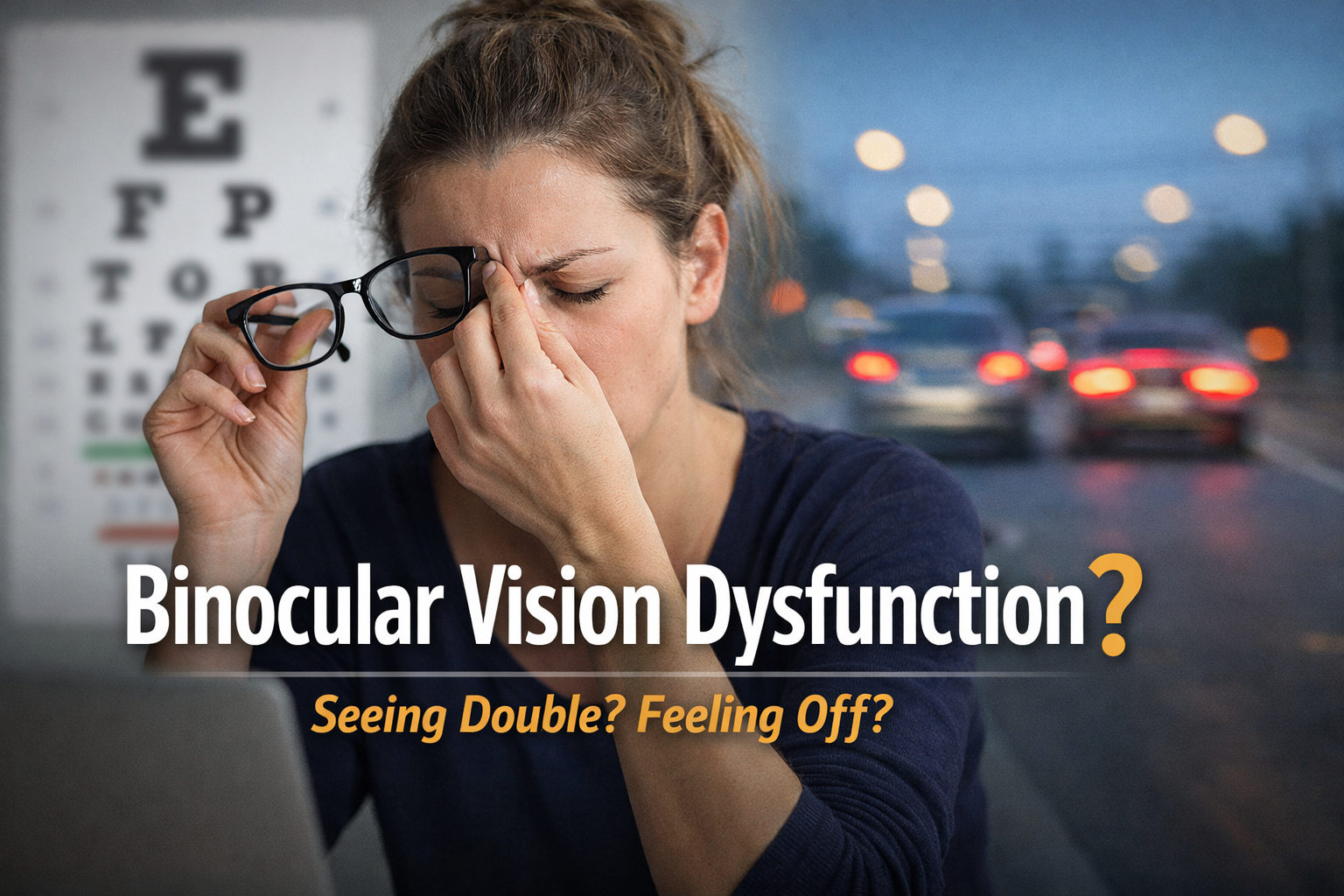
There’s something quietly frustrating about not trusting your own eyes. You look at a page, a screen, a road ahead—and things just feel… off. Not blurry exactly. Not double all the time. Just wrong in a way that’s hard to explain.
That’s often how people describe [binocular vision dysfunction](binocular vision dysfunction). And honestly, it’s one of those conditions that hides in plain sight. You can pass a standard eye exam and still struggle with it every single day.
So… what is it, really?
Binocular vision dysfunction (BVD) happens when your eyes don’t work together as a team. Each eye might be perfectly healthy on its own. But together? Slight misalignment. Tiny coordination issues. Enough to make your brain work overtime trying to merge two different images into one.
And your brain will try. Constantly. That’s the exhausting part.
Common signs people tend to ignore
A lot of symptoms get brushed off as “just stress” or “too much screen time.” Sound familiar?
- Frequent headaches, especially around the eyes or temples
- Dizziness or a subtle sense of imbalance
- Trouble focusing while reading
- Words appearing to move, jump, or overlap
- Neck and shoulder tension (this one surprises people)
- Sensitivity to light
- Feeling unusually tired after visual tasks
And sometimes… just a vague sense that something isn’t right, even if you can’t pinpoint it.
Why it’s so often missed
Here’s the thing—traditional eye exams focus on clarity. Can you read the chart? Great. You’re fine.
But BVD isn’t about clarity. It’s about coordination.
So people go years—years—without answers. They adapt in small ways. Tilting their head. Closing one eye while reading. Avoiding certain activities. Not even realizing they’re compensating.
And yeah, it adds up.
A quick breakdown
| Aspect | What’s Happening | What You Might Notice |
|---|---|---|
| Eye alignment | Slight mismatch between the eyes | Double vision (sometimes subtle) |
| Brain compensation | Brain tries to “fix” the mismatch | Fatigue, headaches |
| Depth perception | Gets thrown off | Clumsiness, misjudging distance |
| Visual processing strain | Extra effort to maintain single image | Trouble concentrating |
It’s not dramatic at first. But over time… it wears you down.
The everyday impact (it’s bigger than you think)
Driving can feel oddly stressful. Not terrifying, just… uncomfortable. Like you’re never fully relaxed behind the wheel.
Reading? That can turn into a chore. A paragraph might take twice as long because your eyes keep losing their place.
Even walking through a crowded place—your brain’s juggling motion, depth, alignment… it can get overwhelming fast.
And then there’s the fatigue. Not the kind you fix with a nap. More like your brain has been doing extra work all day and it’s just… done.
But what causes it?
There isn’t always one clear answer.
Sometimes it’s linked to:
- Past head injuries or concussions
- Long-term visual strain (hello, screens)
- Developmental issues from childhood
- Or just… how your eyes naturally developed
And for some people, it shows up later in life without any obvious trigger. Which can feel confusing, honestly.
The good news (because yes, there is some)
BVD is treatable. Not in a one-size-fits-all way, but there are real solutions.
Treatment often includes:
- Specialized prism lenses
These help align the images your eyes see, reducing the strain on your brain. - Vision therapy
Think of it like physical therapy—but for your eyes and brain working together. - Lifestyle adjustments
Small changes. Screen breaks. Better lighting. Posture tweaks. They help more than you’d expect.
And people who find the right treatment? They usually say the same thing:
“I didn’t realize how bad it was until it got better.”
A small but important note
If any of this feels familiar, don’t self-diagnose—but don’t ignore it either. A specialist in binocular vision (not just a general eye exam) can actually test for this properly.
Because living with constant visual strain isn’t something you just have to accept. Even if you’ve been dealing with it for years.
Final thoughts… kind of
Binocular vision dysfunction isn’t dramatic. It doesn’t demand attention the way some conditions do. It whispers. It lingers. It slowly chips away at comfort, focus, energy.
And that’s why it matters.
Because when your vision works the way it’s supposed to—effortlessly, quietly—you don’t think about it at all. And when it doesn’t… well, you feel it in ways you can’t always explain.
But once you understand it, things start to click. Literally and figuratively.
And that’s a pretty good place to start.