
 By Malik Rehan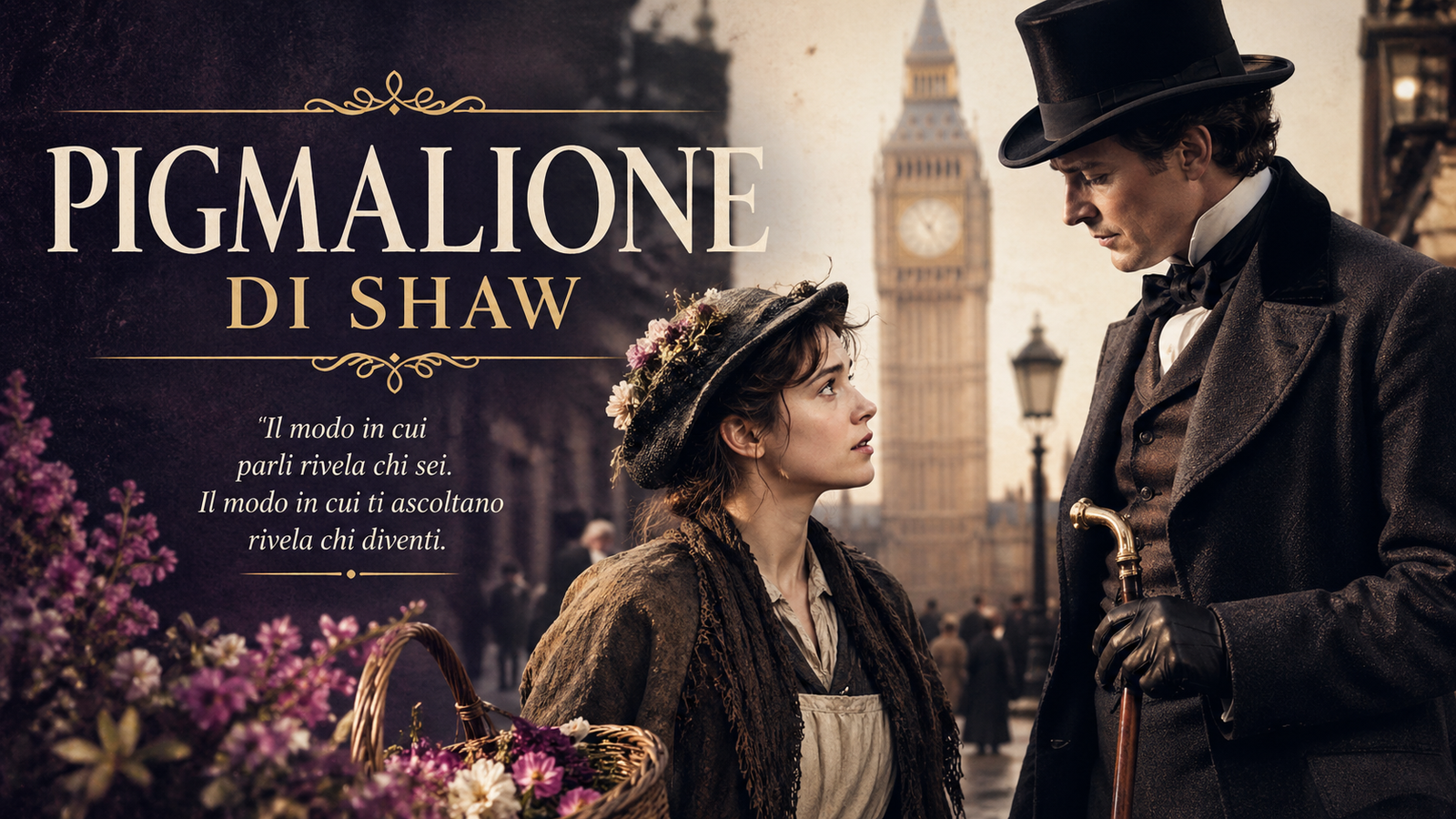
Some stories don’t just sit quietly on a page. They kind of… follow you around. You read them once, maybe for school, maybe out of curiosity—and then later, out of nowhere, something reminds you of them.
Pigmalione di Shaw is like that.
At first glance, it sounds simple. A girl learns to speak better. A professor teaches her. End of story, right?
Not really.
Because once you actually get into it… it’s not about speech. Not only speech, at least. It’s about how people see you. And how that changes everything—even when you didn’t really change inside.
If you want a more structured breakdown, you can check this
👉 pigmalione di shaw
—but here, let’s talk about it like normal people would. No stiff explanations.
The Basic Story (But Told Simply)
So there’s Eliza. She sells flowers. She speaks in a rough, heavy accent—nothing fancy, nothing polished.
Then there’s Henry Higgins. A phonetics expert. The kind of guy who can tell where you’re from just by hearing you say a few words. Smart… but also kind of annoying, if we’re being honest.
He makes a bet.
That he can take Eliza and, just by teaching her how to speak “properly,” pass her off as a lady in high society.
And weirdly… it works.
But also—it doesn’t.
The Characters (Quick and Honest)
Let’s keep it simple:
| Character | What They’re Like | Real Vibe |
|---|---|---|
| Eliza Doolittle | Poor, strong-willed, learns fast | Underrated at first… then powerful |
| Henry Higgins | Genius with language | Smart but kinda rude |
| Pickering | Calm, respectful | The “good guy” energy |
| Alfred Doolittle | Eliza’s father | Funny… but surprisingly deep |
And yeah, you’ll probably like Eliza the most. Not immediately maybe—but give it time.
It’s Not Really About Language… Or Is It?
Okay, so language is important here. That’s obvious.
But the real question is:
Why does it matter so much?
Like… why does speaking “properly” suddenly make people treat Eliza better?
Same person. Same face. Same mind.
Just different words.
It’s a bit uncomfortable when you think about it.
Because it kind of reflects real life too, doesn’t it?
Things That Stand Out (In a Real Way)
There are a few moments in this play that just stick. Not because they’re dramatic—but because they feel… real.
- Eliza getting frustrated
Learning isn’t easy. She struggles. She gets angry. And it doesn’t feel fake. - Higgins being… Higgins
He’s funny sometimes. But also exhausting. The kind of person you wouldn’t want to argue with. - That awkward in-between phase
When Eliza doesn’t fully belong anywhere anymore. Not her old world, not the new one either.
And that last one—that’s probably the most relatable part.
Before and After (But Not So Simple)
Here’s a small comparison. Just to make things clearer:
| Aspect | Before | After |
|---|---|---|
| Speech | Rough, natural | Polished, controlled |
| Confidence | Low-ish | Grows… slowly |
| How people treat her | Dismissive | Respectful (on surface) |
| Identity | Clear | Confused, shifting |
See what happened there?
She improved. But things also got complicated.
Eliza’s Change — More Than It Looks
At first, it feels like she’s just learning pronunciation.
But over time… it becomes something else.
She starts asking questions. Pushing back. Thinking for herself.
And honestly, that’s where the real transformation is.
Not in her voice.
In her mindset.
And Higgins… What About Him?
Let’s talk about him for a second.
Because people usually ask—is he the bad guy?
Hmm.
Not exactly.
But also… not great.
He treats Eliza like a project. Like something to fix. He doesn’t really think about her feelings. Or her future.
He’s focused on the experiment.
And yeah, that makes him hard to like sometimes.
But without him… the story wouldn’t happen.
So he’s kind of necessary. Even if he’s frustrating.
Themes That Quietly Hit You
This isn’t the kind of story that shouts its message.
It just… lets you notice things.
Like:
- How quickly people judge based on speech
- How society creates invisible barriers
- How change can feel isolating
And that last one… it stays with you.
Because improving your life sounds great.
Until you realize it might distance you from where you started.
Why It Still Feels Relevant
You’d think a story like this would feel outdated by now.
But weirdly—it doesn’t.
Because:
- People still judge accents
- People still connect speech with intelligence
- Social class still exists (just in different forms)
So yeah… different time, same problems.
The Ending (Without Spoiling Too Much)
The ending isn’t neat.
No perfect resolution. No fairy tale.
Just… a sense that things have changed. And they can’t go back.
And honestly? That makes it better.
Because real life doesn’t wrap things up nicely either.
Final Thoughts (Not Too Formal)
Pigmalione di Shaw isn’t just about turning a flower girl into a lady.
It’s about what happens after that.
That weird space where you’ve changed—but you’re not sure where you belong anymore.
And maybe that’s why it feels so real.
Because we’ve all had moments like that. Not exactly the same, of course—but similar.
Moments where things shift… and you’re left figuring it out as you go.
And yeah—this story doesn’t give you all the answers.
But it makes you think.
And sometimes, that’s enough.
 Admin
Admin