
 By Malik Rehan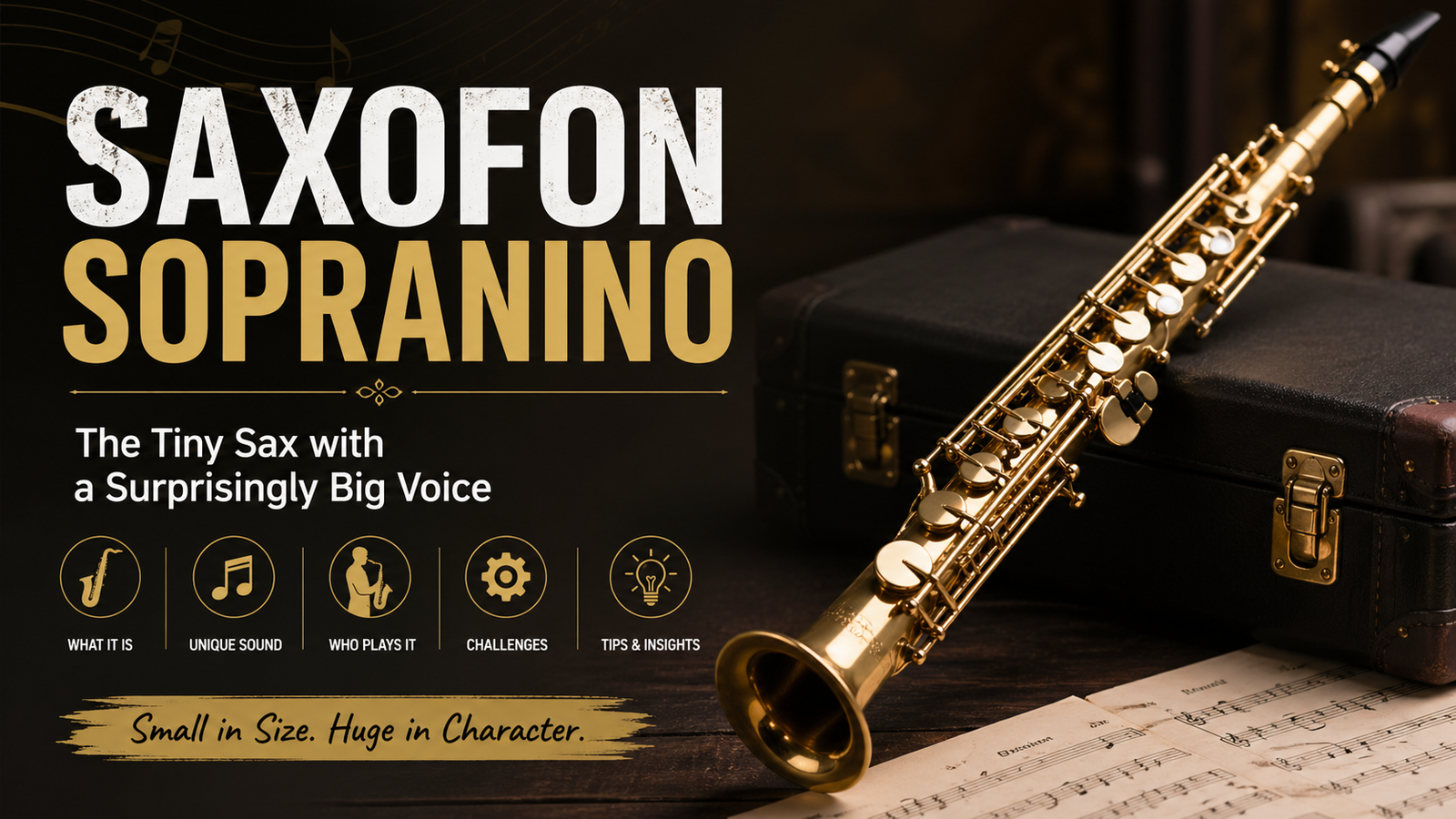
There’s something oddly charming about small instruments. They look almost like toys at first glance… until someone actually plays them. And the saxofon sopranino? Yeah, that’s one of those instruments.
Tiny. High-pitched. A little mysterious.
If you’ve ever seen one in real life, you probably paused for a second — “Wait, that’s a saxophone?” It doesn’t have the bulk of a tenor or the familiar curve of an alto. It’s smaller, straighter (most of the time), and honestly… a bit underrated.
Let’s talk about it. Not in a stiff, textbook way — just like we’re exploring something cool together.
What is a Saxofon Sopranino?
At its core, the sopranino saxophone is the smallest member of the standard sax family. It’s pitched in E♭, which means it sits higher than the soprano sax.
And yeah… it sounds high.
Like, really high. Bright. Sharp. Sometimes almost piercing — but in a beautiful way when played well.
If you want to explore more about it in detail, you can check this guide:
👉 saxofon sopranino
But let me break it down simply:
- Smaller than soprano sax
- Usually straight (not curved like alto or tenor)
- Very high pitch
- Less common, more niche
- Used in jazz, classical, and experimental music
And here’s the thing — it’s not a beginner’s instrument. Not really. It takes control. A lot of control.
Why Does It Sound So Different?
Size matters here. The smaller the instrument, the shorter the air column… and the higher the pitch.
Simple physics. But the result? Not so simple.
The sopranino has a tone that can feel:
- Bright and cutting
- Slightly edgy
- Sometimes almost “whistling”
- But also delicate, if handled gently
And that balance — between sharp and soft — is where the magic lives.
But yeah… it can also sound harsh if you don’t control it properly. Not gonna lie.
A Quick Comparison Table
Here’s how the sopranino stacks up against other saxophones:
| Saxophone Type | Key | Size | Tone Quality | Common Use |
|---|---|---|---|---|
| Sopranino | E♭ | Very small | Bright, sharp | Experimental, jazz |
| Soprano | B♭ | Small | Clear, focused | Jazz, pop |
| Alto | E♭ | Medium | Warm, balanced | Beginner, bands |
| Tenor | B♭ | Large | Deep, rich | Jazz, blues |
| Baritone | E♭ | Very large | Heavy, powerful | Big bands |
See? Sopranino sits right at the top — almost like the “treble voice” of the sax world.
Who Actually Plays It?
This is where things get interesting.
You won’t see sopranino saxophones everywhere. They’re not in school bands much. Not in pop music either.
But in certain circles? Oh, they shine.
Some musicians who’ve explored it:
- Avant-garde jazz artists
- Experimental composers
- Classical saxophonists
- Saxophonists who just… want something different
And honestly, that’s the vibe. The sopranino isn’t mainstream — it’s for people who like to explore sound a bit deeper.
Challenges of Playing Sopranino
Let’s not pretend it’s easy. It’s not.
Actually, it’s kind of tricky. Even experienced sax players struggle with it at first.
Here’s why:
- Embouchure control – You need very precise mouth positioning
- Intonation issues – It can go out of tune easily
- Breath control – Small instrument, but demands careful airflow
- Reed sensitivity – Tiny changes affect sound a lot
And yeah… it can squeak. A lot. Especially in the beginning.
But that’s part of the journey, I guess.
Why Do People Still Love It?
Good question. If it’s hard, rare, and a bit unpredictable… why bother?
Because when it works — it really works.
There’s something unique about its voice. It cuts through ensembles in a way other saxophones don’t. It can float above everything… almost like a violin, but with more edge.
Some reasons people fall in love with it:
- It stands out instantly
- It adds a unique color to music
- It feels expressive in a different way
- It challenges you (and yeah, that’s appealing)
And sometimes, musicians just want something… unusual.
When Should You Try One?
Okay, real talk — should you try a sopranino?
Maybe. But not as your first instrument.
It’s better if you:
- Already play alto or soprano sax
- Understand basic saxophone technique
- Have decent breath control
- Are curious about new sounds
But if you’re a beginner? Start with alto. Trust me. The sopranino can wait.
A Few Practical Tips
If you do decide to try it, here are some small but helpful tips:
- Start with a softer reed — it’s easier to control
- Practice long tones (yes, boring… but important)
- Use a tuner — intonation can drift fast
- Don’t overblow — it’ll just sound harsh
- Be patient… like, really patient
And don’t worry if it sounds weird at first. That’s normal.
Final Thoughts — A Small Instrument with Big Personality
The saxofon sopranino isn’t for everyone. It’s not the most popular, not the easiest, and definitely not the safest choice.
But that’s kind of the point.
It’s different. A little wild. A little unpredictable.
And honestly… that’s what makes it special.
If you ever get the chance to hear one live, don’t skip it. And if you ever get the chance to play one — even better.
Just be ready for a bit of a challenge.
And maybe a few squeaks along the way… 😄