
 By Malik Rehan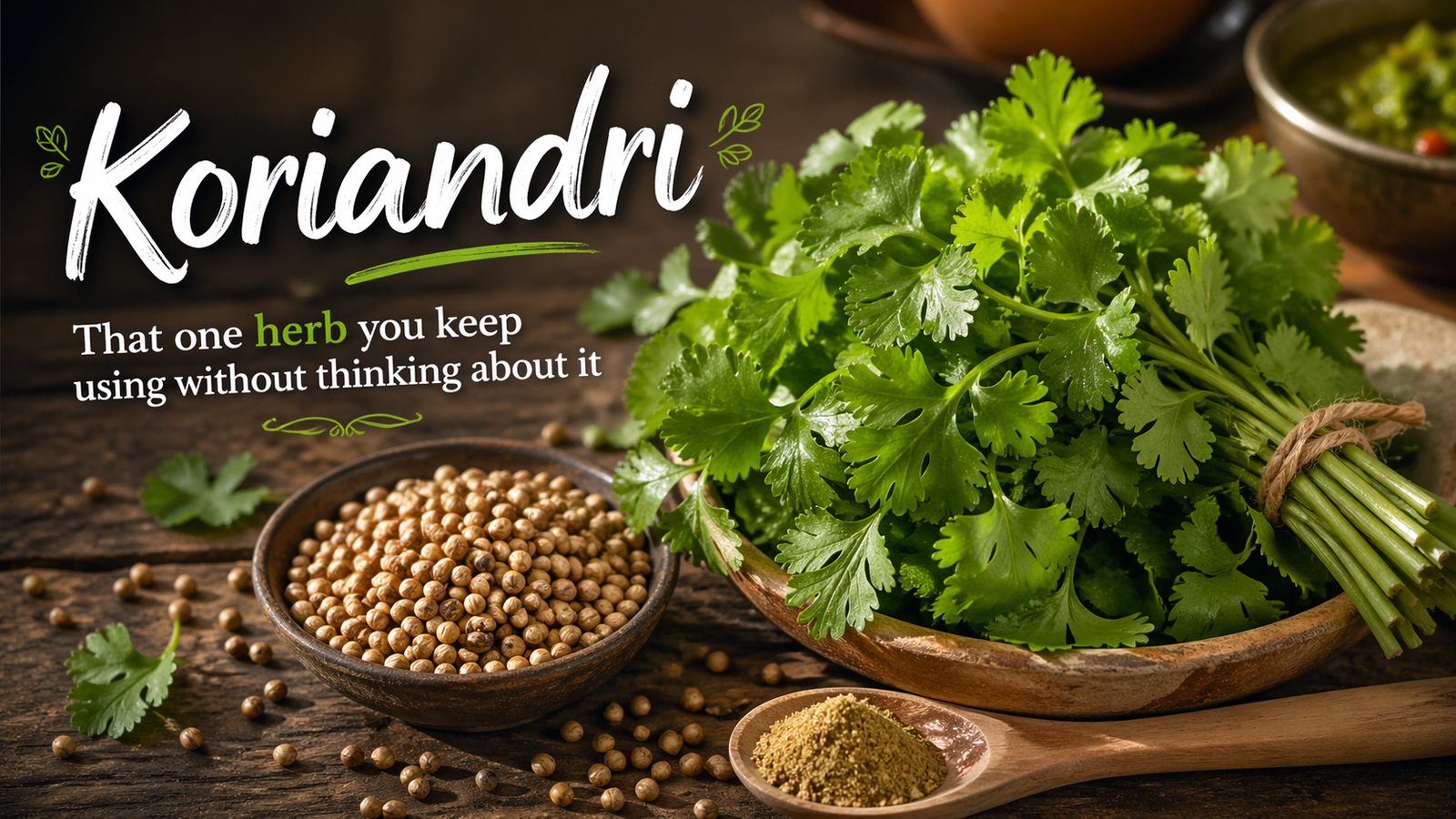
I’m pretty sure you’ve eaten koriandri a hundred times… maybe more. You just didn’t stop to notice it. I didn’t either, for a long time.
It’s one of those things that shows up quietly. A little sprinkle on top of daal. Mixed into chutney. Sitting in the background of a curry, doing its thing. Not asking for attention. And somehow… making everything taste more “complete.”
Yeah. That’s koriandri.
Wait, what even is koriandri?
Okay, simple version.
Koriandri is basically coriander. But people use the word in slightly different ways, which makes it confusing for no reason.
Sometimes it means the fresh green leaves (the ones you chop and throw on top of food).
Other times, it means the tiny round seeds you find in spice boxes.
Same plant. Totally different taste.
- Leaves → fresh, kind of citrusy, a bit sharp
- Seeds → warm, soft, slightly nutty
If you didn’t know they came from the same plant… honestly, no one would blame you.
You’ve definitely eaten it
Even if the name feels unfamiliar, the taste probably isn’t.
Think about it—
- That green topping on biryani? koriandri
- The fresh smell from your daal? yeah, that too
- Chutney with that bright kick? also koriandri
It’s everywhere in desi cooking. Everywhere. You just stop noticing it after a while because it feels… normal.
Some people hate it (seriously)
Here’s the weird part.
Not everyone likes koriandri. Some people say it tastes like soap. Actual soap.
Sounds dramatic, but it’s real. Something to do with genetics. So if you’re one of those people, fair enough—you’re not imagining it.
But if you like it, you probably really like it.
Because it does something small but important:
- cuts through heavy food
- adds freshness without trying too hard
- makes simple dishes feel… less boring
Hard to explain properly. You just feel it.
Quick nutrition thing (nothing too deep)
Not gonna pretend it’s some magical superfood. But it’s not useless either.
| Thing inside it | Why it matters (kind of) |
|---|---|
| Vitamin C | helps your body a bit |
| Vitamin A | good for eyes, skin |
| Antioxidants | general “good stuff” |
| Fiber (seeds) | digestion help |
You’re not eating koriandri for health. But hey, nice bonus.
Using it is… pretty easy
No need for complicated recipes.
Just start small:
- chop it and throw it on daal or rice
- mix into yogurt with a pinch of salt
- add to salads if you’re feeling fancy
- crush the seeds into your cooking
That’s it. No rules. You’ll figure out how much you like over time.
And yeah, first few tries might feel off. Too strong. Too little. Happens.
One small tip (actually important)
Don’t cook the fresh leaves too much.
Like… don’t.
Add them at the end. Or after cooking. Otherwise the flavor just disappears and you’re left wondering why it even matters.
Took me a while to realize that.
If you wanna read more about it
I came across this while randomly searching one day—it explains things in a simple way:
👉 koriandri
Nothing too heavy. Just useful stuff if you’re curious.
Random little things I learned
Not super organized, but helpful:
- fresh koriandri goes bad quickly… don’t ignore it in the fridge
- stems have flavor too (people throw them away for no reason)
- seeds taste better if you toast them a bit first
- and yeah… don’t overthink it
Cooking isn’t that serious.
So yeah…
Koriandri isn’t special in a flashy way.
It’s not like saffron or something expensive. It doesn’t stand out on its own. It’s just there… quietly doing its job.
But take it away from certain dishes, and suddenly everything feels a little dull. Like something’s missing but you can’t point at it.
That’s the funny part.
It doesn’t try to be important.
But it kind of is.